
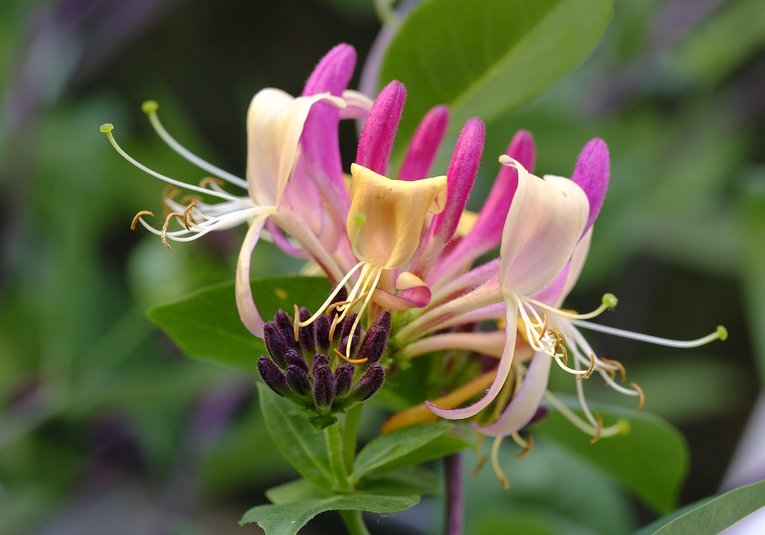
 Turn a handful of fresh honeysuckle blossoms into a delicate floral syrup you can stir into drinks, drizzle over desserts, and gift to friends.
The Evening Garden: Why Night-Blooming Flowers Deserve a Spot in Your Yard
Most of us plant for the middle of the day. We flip through catalogs imagining bright afternoons, full sun, and colors that pop against a blue sky. But how often are you actually outside at noon? For many of us, the garden gets its real use in the evening — after work, after dinner, when the light softens and the air cools. That's when a whole different cast of plants takes the stage, and they've been waiting for you to notice them.
An evening garden isn't a separate space from your daytime beds. It's more of a shift in attention. You're choosing plants that hold their own when the sun drops: pale flowers that catch the last light, foliage that releases scent as the temperature falls, and shapes that read well in dim conditions. Honeysuckle fits this brief beautifully, but it's far from the only player.
Why White and Pale Flowers Glow at Dusk
In low light, the human eye leans on contrast more than color. Deep reds and purples tend to disappear into shadow, while whites, creams, pale yellows, and soft pinks seem to brighten as the world darkens. This is why moon gardens — a classic idea in garden design — lean so heavily on white blooms. Plant them where you'll pass them after dark: along a path, near a patio edge, by the door you use most in the evening.
Some reliable choices: white nicotiana, which opens in the evening and pours out a sweet, almost jasmine-like perfume; evening primrose, whose yellow flowers unfurl in minutes as dusk arrives; and the many white forms of phlox and four o'clocks. If you already grow honeysuckle, notice how its pale cream and yellow trumpets seem to float against a dark hedge. That quality is no accident — it's exactly the effect evening pollinators are tuned to find.
Scent matters as much as sight here. Cooler, heavier evening air holds fragrance closer to the ground, so a single flowering tobacco plant can perfume an entire patio. Plant scented flowers where you sit, not just where you look.
Designing for the Hours You Actually Use the Garden
Start by walking your yard at dusk with a notebook. Where do you naturally linger? Which corners feel dark and forgotten? Then work backward from there. A few simple moves can transform the experience: a small light source that doesn't wash out the garden, seating placed to face the most fragrant bed, and a path lined with pale blooms that guides you through the space without needing overhead lighting.
Think about texture, too. In low light, spiky leaves, tall seed heads, and grasses that move in the breeze add interest that flat flowers can't. Ornamental grasses catch the last glow of the sky and sway in evening air, giving the garden a sense of motion when everything else is still.
You don't need a large yard or a big budget. One fragrant vine by the porch, a cluster of white blooms near a bench, and a comfortable chair in the right spot can turn an ordinary backyard into the part of your day you look forward to most. The evening garden rewards a little planning with hours of quiet pleasure — long after the daytime blooms have closed up shop.